

- Teacher: Esteban Courbet
- Teacher: Alexandra Feddersen
- Teacher: Regula Hänggli Fricker
- Teacher: Martin Huber
- Teacher: Christoph Leuenberger
- Teacher: Hervé Platteaux
- Teacher: Emmanuelle Salietti
- Teacher: Thilo von Pape
- Teacher: Florin Zai
- Non-editing teacher: Sara Baitella
- Non-editing teacher: Tim Camp
- Non-editing teacher: Shaila Caspanello
- Non-editing teacher: Jan Matti Dollbaum
- Non-editing teacher: Shana Nastasia Sägesser
To obtain registration key, contact elizabeth.umlas@unifr.ch
Summary: This course seeks to provide a solid grounding in business and human rights as an emerging and rapidly developing field. The course will enable students to apply key concepts learned to practical, real-life examples, and to understand current and evolving debates around corporate responsibility to respect human rights. The first part of the course introduces the field of business and human rights (why human rights matter to business; the state of the international debate on corporate responsibility to respect human rights; the evolution of the UN framework and Guiding Principles on business and human rights) and presents an overview of measures and mechanisms through which stakeholders might hold business accountable for this responsibility (judicial and non-judicial mechanisms; multi-stakeholder initiatives; civil society organization campaigns; emerging laws, etc.). The second part takes a more sectoral/thematic approach, focusing on selected areas that pose particularly difficult human rights challenges for companies (extractive industries and indigenous people's rights; labor rights in global supply chains), examining key issues in these areas and exploring how companies, civil society organizations, governments and other stakeholders have sought to address these. The final two sessions of the course will be devoted to group presentations.
- Teacher: Elizabeth Umlas
L’objet de la première partie du cours est de présenter les notions générales sur l’ordre juridique, une introduction au droit des personnes physiques et morales et au droit des sociétés et, enfin, une introduction au droit public.
Cette dernière partie comprendra une présentation de l’ordre constitutionnel suisse, un aperçu de quelques lois fédérales de droit public, notamment en droit de la concurrence, une introduction au droit international public ainsi à l’Union européenne et à son fonctionnement et, pour terminer, une présentation rapide des instruments de droit européen auxquels la Suisse est partie.
- Teacher: Bernard Dubey
- Teacher: Annick Fournier
Should we push for more or less economic growth? This course covers normative arguments and empirical evidence which are useful for answering this question.
In the 1970s, the Club of Rome prompted a large public discussion about the desirability of economic growth. Since then, the debate has subsided or turned into a one-sided debate with the economics and policy mainstream taking support for economic growth for granted and thus constituting a “silent majority”. The issue has recently gained steam with post-growth scholars on the one hand and progress studies scholars on the other hand taking more deliberate and vocal stances against and for growth, respectively.
This course equips students to take a clear position themselves by examining and philosophically assessing the relationship of economic growth to goals such as poverty eradication, equality, happiness, liberalism, animal welfare, environmental degradation, or extinction risks.
The course focuses primarily on active reading and oral discussions. It requires regular presence.
- Teacher: Dominic Roser

Gestion des Ressources Humaines
Cours Bachelor 3e année (SA 2026)
Description du cours:
Le cours présente les enjeux, les problématiques et les principaux instruments de la gestion des ressources humaines. Des exercices et des études de cas permettront d'aborder de façon interactive les questions des politiques d'emploi, de rémunération, de développement humain et de participation dans les grandes entreprises multinationales et les PME.
- Teacher: Eric Davoine
- Teacher: Christelle Zagato
Ce cours a pour but de fournir les outils mathématiques nécessaires à comprendre les notions enseignées dans les cours d'économie politique, de gestion d'entreprise et d'informatique de gestion.
Contenu
- Rappel de quelques notions de base
- Calcul différentiel
- Application des dérivées
- Optimisation univariée
- Calcul matriciel
- Programmation linéaire
- Teacher: Nathan Kunz
- Teacher: Leonardo Nicchiotti
- Teacher: Thomas Rey
- Teacher: David Schindl
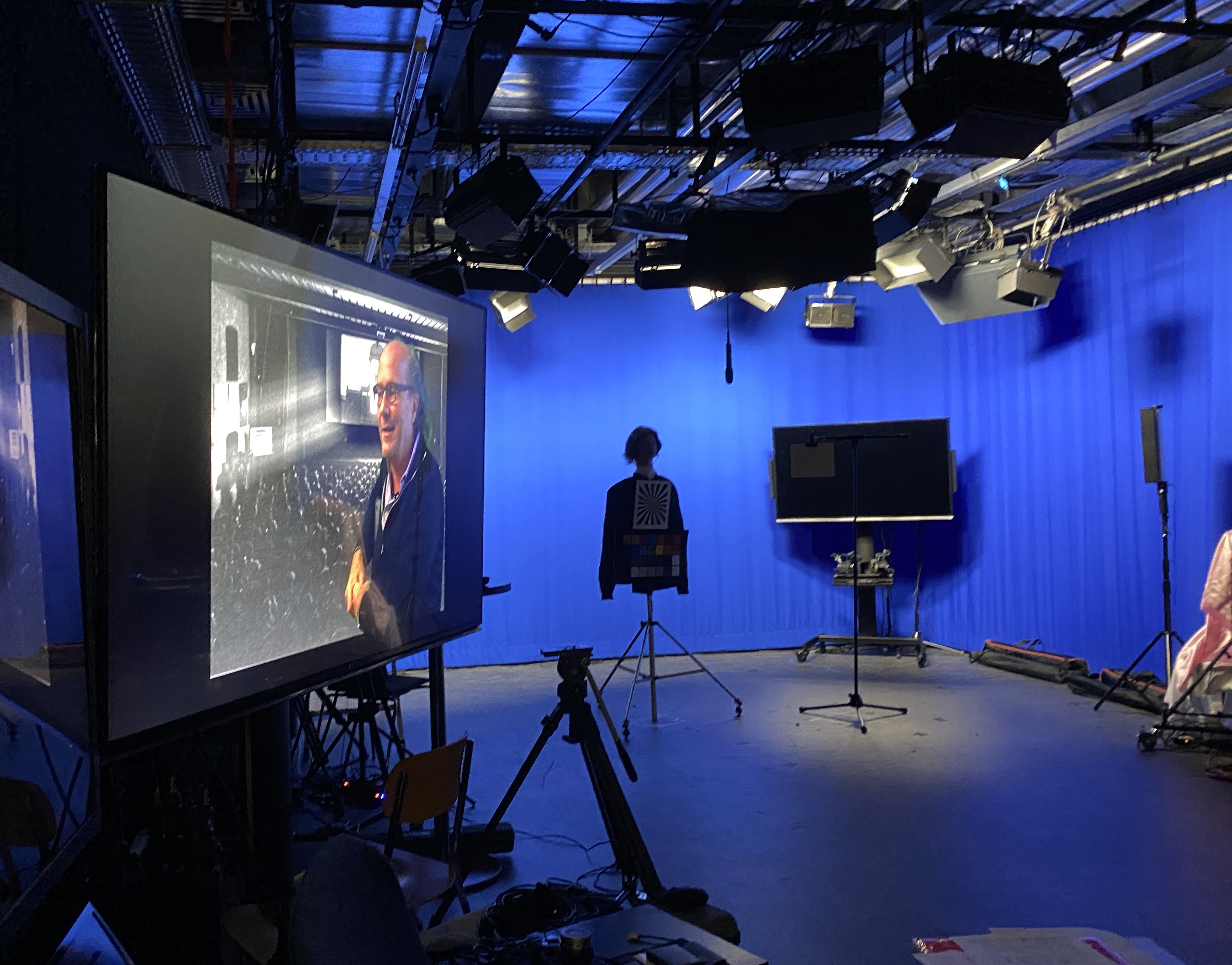
Der Praxiskurs Film und Fernsehen vermittelt Filmpraxis verbunden mit Filmtheorie. Die Studierenden erwerben sich das Know-How für einen filmischen Kurzbeitrag und stellen als Gruppenarbeit zwei eigene Filme her: ein Interview (ca. 5 Min.) und ein Porträt (6 – 9 Min.), plus ein schriftliches Filmkonzept. Der gemeinsame Seminarteil mit Anka Schmid findet an sieben Dienstags-Terminen statt. Es gibt Einführungen in die filmische Bild- und Tongestaltung verbunden mit praktischen Übungen. Zudem schauen und analysieren wir exemplarische Kurzfilme aus der TV- und Filmwelt als Input für das Konzept und die Realisierung der eigenen Kurzfilme. An den freien Dienstagsterminen produzieren die Studierenden ihre Filme. Dreh und Schnitt werden in den verschiedenen Gruppen durchgeführt und in Absprache individuell betreut. Die Filme werden analysiert, diskutiert und bewertet. Basis für die Vergabe der Credits ist die Evaluierung der Filme, des Konzeptes und die aktive Mitarbeit im Seminar.
Die Studierenden erwerben sich mittels praktischen Übungen und zwei Gruppenarbeiten (Interview und Porträt) das Know-How von Kameraführung, Tonaufnahme, Schnitt und schulen ihr filmisches Auge und Ohr.
Die Realisierung der eigenen Filmbeiträge ermöglicht den Teilnehmenden wichtige, erste Erfahrungen in der audio-visuellen Medienwelt, von der Konzeption zu den Dreharbeiten bis zur Montage und der digitalen Fertigstellung.
Die Teilnehmerzahl ist auf 20 Studierende beschränkt.
- Teacher: Anka Schmid